The Problem with “Feminist Porn”

Feminism has had an interesting relationship with pornography. Second-wave feminists were unequivocally hostile towards it, with activists such as Andrea Dworkin and Catharine MacKinnon attacking the industry for its impact on women. Calling it “the graphic sexually explicit subordination of women through pictures or words,” they claimed that pornography desensitized men to the humiliation and degradation of women, leading to an increase in cases of rape and violence against them.

For all their verve, the porn industry has only got bigger and bigger; pornography becoming more and more mainstream and accepted. Women who speak out against porn are labelled as frigid prudes, while women who talk about enjoying porn with their boyfriends are given the thumbs-up from society. Many feminists seem to have given up that fight, accepting that porn is here to stay, and have settled for working within that framework rather than calling for its abolition. One of the ways that they have done this is by coming up with porn that is more feminist-friendly, where women are more natural, come in all shapes and sizes, and the videos are woman-produced and woman-owned.

Are these sites more feminist-friendly than what we think of as ‘normal’ porn? Sure. In mainstream porn, we see a host of interchangeable girls with large breasts and small waists, with men tit-fucking them, slapping their breasts, shoving their cocks in their mouths, or shooting cum in their faces. In fact, the only scenes that seem to be about mutual satisfaction are the ones where women pleasure each other in the absence of men, although of course in these instances the male gaze is assumed. By contrast, sites such as Furry Girl, VegPorn, Femmerotic and Erotic Red unashamedly celebrate the natural and oft-uncelebrated, whether its female body hair, different female body types, or menstruation. All of which are good things.

Yet, clicking through the sites, I see pictures of women, pictures of women, and more pictures of women. I’m glad that we’re being more inclusive, but I, as a straight woman, would also like to be aroused by porn. Thank god for gay porn (which, in the male-dominated porn industry, obviously means gay male porn.)

This is a massive imbalance in the porn industry, and one which we seem to have normalized and accepted, so much so that it doesn’t even occur to us. The industry continues to spew out videos and images of women – women’s faces, women’s breasts, women’s vaginas, women’s moans – the only close-ups you get of the men are of their erect penises, and most of them hardly make any noise aside from some stoic grunting. And then, when only a fraction of women are aroused by such videos, compared to hoards of men, society has the audacity to conclude that women are not aroused by visual imagery, that women have lower libidos, that women prefer romance, and so on and so forth. And the fact that women are subtly encouraged to enjoy porn that has been created exclusively for men is ludicrous, and smells like the dreaded assumption that “men are people; women are women.” A woman who likes what your stereotypical man likes is cool, be it football, guns, beer-guzzling, even sexual encounters with other women, apparently. But god forbid a man be into anything a stereotypical woman likes. God forbid he be interested in dolls, ballet, or sexual encounters with men. That above all.

The examples we have of feminist porn sadden me. Have we become so used to seeing women as sex objects to be viewed by men, that a role reversal is inconceivable? Is making the porn industry more feminist just about creating a greater diversity of women? Are men only to be objectified when the consumers are other men? (as in gay porn?) Are women only allowed to be consumers when the objects of arousal are other women?

In theory, I see nothing wrong with sexual objectification. But, and this is a huge but, where the problem starts is when it goes on to be part of that person’s identity, an assumption that that is all they are. And this is what is happening to women, not just individual women (though certainly some experience it more than others) but women as a group. Thus I have no real problem with pornography in theory, but as it stands today, rife with misogyny, coercion, humiliation, shame and degradation, it sickens me.

Certainly, the porn industry needs to be revolutionised, and I suppose the sites I’ve listed above, and others like them, are a small step in the right direction. But we need to challenge the view that only men can be consumers, to show that women can enjoy men too, rather than merely expanding the net of women who qualify to be featured as sex objects. We need to remove the shame and stigma associated with pornography, to improve the lives of the actors within it. We need to harness a genuine and equal level of respect to all – all genders, all races, all orientations, all actors, and all viewers. Only then can I get behind it, and proclaim just how feminist pornography can be.
Feminism and The Hunger Games

**** Warning – Spoilers ahead****
Before I begin I should make clear that I haven’t seen the movie yet, and my comments here are entirely based on the book by Suzanne Collins.  

The Hunger Games — A twisted form of Survivor where participants are placed in an open space with limited supplies, play to the audience for popularity, and aim to be the last one standing. Only, instead of being voted out, you get killed. And instead of being willing adult contestants, they are 12 to 18 year-olds who are forced to be there. The action was so gripping that I stayed up all night reading it, absorbed in the world of Panem — its horrific dictatorship, its brutality, its class oppression. But although taken to a chillingly sadistic level, these themes aren’t all that new. We’ve seen them all before, in history books, in novels, in revolutionary plays. No, the one aspect which completely blew me away was the gender neutrality of Panem, and in this sense alone, their society is far more progressive than any the world has ever seen.

The Hunger Games has been labelled as feminist, though I find this label rather misleading. Of course it’s easy to see why it has been called so. The main character, Katniss, is a veritable force of nature, hunting in the woods, trading in the market, providing for her family, looking out for both herself and others (male and female) in the arena. But I can’t help but feel that our interpretation of the book as feminist says far more about our society than it does about the book. Katniss, in and of herself, without the distorting lens of our own experiences, is no feminist crusader, for the simple reason that she doesn’t need to be. Gender-based oppression just isn’t an issue in the country of Panem. In her world, she represents the lower classes, crushed down by the Capitol, struggling to survive and care for the ones she loves. She doesn’t represent women; her sex is purely incidental, and largely irrelevant to the plot.

In Panem, gender equality is taken for granted. The nature of The Games itself reflects this — 12 boys and 12 girls are pitted against each other in an arena, with zero commentary about the gender dynamics of this. It’s also realistic. You don’t see the physically smaller Katniss, Foxface or little Rue engaging in kickass hand to hand combat against massive male characters (think Fiona in Shrek); they survive by concealment, wit, knowledge of plants and hunting, and in Katniss’ case, attacking from a distance. Katniss’ gender is never even mentioned when the likelihood of her winning the Games comes up, and she is scorned by the Careers (3 girls and 3 boys) due to her humble origins, not her sex. Far from being an overly-sexualised, female action figure (Lara Croft, anyone? Final Fantasy?) Katniss is simply herself — courageous, smart, strong, and very, very human.

Zooming out from Katniss, we see that the entire gender landscape of Panem is happily neutral. There is neither a feminine nor a masculine ideal, with characters of either sex occupying all levels of the gentle/aggressive spectrum. Katniss herself may be tough as nails and shies away from showing emotion, but softer female characters, like the sweet, emotional Prim and the trusting, lovable Rue have qualities that are worth no less than hers. Strength, honour and bravery are expressed in traditionally masculine ways when it comes to Gale and Thresh, while the stereotypically feminine qualities of noble self-sacrifice in the name of love are found in Peeta. The fact that Katniss, a girl, rescues Peeta, a boy, countless times in the arena, makes huge waves in our society, but passes without comment in theirs. They take notice of the bravery in Peeta that we, so consumed by what we perceive as role reversal, miss, resulting in online comments about how shamefully useless Peeta is. If Katniss were male and Peeta female, would Peeta still be mocked as “useless”? Surely not. After all, he was instrumental to Katniss’ survival, by misleading the pack of Careers, and helping her to escape Cato.

Is Suzanne Collins a feminist? Very likely. Does The Hunger Games help the cause of feminism? Sure. But I think Katniss herself would be perplexed to hear herself called a feminist character, and surprised that The Hunger Games is sometimes described as a ‘girly book’, for the sole reason (as far as I can see) of having a female lead and a bit of romance. It is a book about political systems, class, oppression and survival, but feminist only because it contrasts so markedly with gender-limiting society as we know it.

The Clothes That Bind

Walking through the slushy snow of London yesterday, I was struck by the number of couples I saw, in which the woman was walking nervously, carefully along, holding on to her male partner for support.

Now having a feminist turn of mind, I found myself wondering why this was the case. Are women inherently less skilled at moving on ice? The female-dominated sport of figure skating seems to show that this is not the case. Perhaps, then, the couples were conforming to standard ideals of masculinity and femininity, with the woman exaggerating her role as the helpless damsel in distress, and the man acting the part of her gallant protector? While I’m sure this dynamic does indeed play out in many relationships, and is worth a whole blog post in itself, the answer in this case was breathtakingly simple. All I had to do was look downwards.

The shoes were the culprit. While the men were, for the most part, wearing boots or trainers, the women’s shoes varied widely. I spotted the inevitable high heels, ballet flats, boots with spindly heels, and furry “winter boots”, which look pretty and wintery but absorb water like a sponge. What all these shoes had in common was that they were blatantly unsuitable for walking in snow. So why were women wearing them?

I’m not for a second ridiculing these women for their choice of footwear. I too, have been (for many years) blind to the absurdity of inappropriate shoes, and have suffered for it. I’ve put on 4-inch heels for a night out dancing, even when I knew that I would regret it by the end of the night. On those occasions I would then proceed to experience the awful ball-of-the-foot pain that most women are familiar with, meaning that my enjoyment decreased as the night wore on, to the point where forgetting about the pain was an impossibility. It took quite a few of these experiences to finally make me promise myself to make comfort a priority, and I’ve gained a bit of a reputation for choosing to wear trainers to clubs. But that’s the thing – departing from the norm had to be a conscious decision. There are clothing expectations of women, just as there are for men. Women will wear women’s clothes and footwear, and ditto for men. So the question isn’t really ‘why are women choosing to wear these shoes’, but rather- why is the shoe fashion for women the way it is?

Clothes have always played a big part in the oppression of women. In 19th century Britain, impossibly tiny waists were the fashion, and women had to lace themselves into the tightest corsets to achieve that look. In the Chicago Tribune, this practice was denounced:

“THE SLAVES OF FASHION, through Long Centuries Women Have Obeyed Her Whims

It is difficult to imagine a slavery more senseless, cruel or far-reaching in its injurious consequences than that imposed by fashion on civilized womanhood during the last generation. … the tight lacing required by the wasp waist has produced generations of invalids and bequeathed to posterity suffering that will not vanish for many decades. … And in order to look stylish, thousands of women wear dress waist so tight that no free movement of the upper body is possible; indeed in numbers of instances, ladies are compelled to put their bonnets on before attempting the painful ordeal of getting into glove-fitting dress waists.”

Before the 20th century, fashionable women in China were required to have their feet bound, breaking the bones and preventing further growth, forcing them into tiny ‘lotus shoes’, all in order to make them look more dainty and feminine. In “Splendid Slippers; A Thousand Years of an Erotic Tradition” by Beverley Jackson, one of the reasons for its appeal is explained:

“For men, the primary erotic effect was a function of the lotus gait, the tiny steps and swaying walk of a woman whose feet had been bound. Women with such deformed feet avoided placing weight on the front of the foot and tended to walk predominantly on their heels. As a result, women who underwent foot-binding walked in a careful, cautious, and unsteady manner.”

Besides the pain and discomfort that such fashions cause women, it can also lead to needless loss of life. A book by Kat Banyard, The Equality Illusion, cites an example. In 1991, when Bangladesh was hit by a cyclone, 90% of the casualties were women. One of the reasons for this was that women were not allowed to leave the house unaccompanied by a male relative. The other reason was that their clothes made it difficult for them to run or swim to safety.

Nor should we think that repressive clothing rests in the domain of history and the non-Western world. Let’s have a look at some of the clothes that most Western women today have worn at least a few times in their lives:

-skirts so tight that taking large strides is impossible
-dresses so low-cut that one avoids bending over
-high heels that cause pain and limit mobility
-skirts so short we have to cross our legs when we sit, and again refrain from bending over, to avoid accidental exposure

It almost seems as though, while designing women’s fashion, there have been two rules of thumb:

1. Does the item of clothing in question enhance her sexual desirability?
2. Is the item of clothing physically or psychologically restrictive enough to ensure that she doesn’t behave in an overly boisterous fashion, thereby undermining her ‘femininity’?

Even young girls fall victim to it. Placed in pink, frilly, poofy dresses from a young age, how can she be expected to run around, climb trees and play ball the way her brothers do? Parents often croon about how much more active their sons are, compared to their daughters. How can she possibly be as active as they are, when she is hampered by layers and layers of material, coupled with advice to sit ‘like a lady’ (read: don’t move too much) while wearing the dress?

But since we were talking about shoes, let’s get back to that. A post on this blog covers the history and appeal of high heels rather well, and contains the following sentence: “high-heels alter the tilt of the pelvis, resulting in more prominence of the buttocks and displaying of the breasts, creating a “come-hither pose” also described by Rossi as the “pouter pigeon” pose, “with lots of breast and tail balanced precariously on a pair of stilts.” Now that sounds chillingly like the reason for the popularity of foot binding.

Also of note in her post are the health repercussions of wearing heels, with the statistic that (according to the American Academy of Othopaedic Surgeons) women are 9 times more likely to develop a foot problem due to their shoes than men are. In a study from the Journal of Applied Physiology, it is shown that frequent walking in high heels shortens fibres in the calf muscle, which makes the Achilles tendon stiffen instead of flex with each step. Over time, the natural position of the foot changes, and wearing flats to exercise actually increases their risk of injury. I could go on about the damage high heels do to our feet, but simply googling “high heel injury” would give a wealth of information which would be too extensive to fit into this blog. Suffice to say that, while not as drastic in its effects as whalebone corsets or lotus shoes, the practice of wearing high heels to appear attractive falls into the same patterns of physical restrictions, and the altering of women’s bodies for the sake of fashion.

I would love to proclaim, “Let us dump these inane fashions immediately and embrace comfort forevermore!” but unfortunately I know it isn’t so easy. Many of us work in environments where high heels are part of the dress code, and wearing flats may make one appear less professional, less attractive in the eyes of clients. Insisting on wearing comfy shoes everywhere, even to dinner parties and balls, may cause society to label one as an eccentric. But I suppose I’d ask this question. Should an emergency occur, should a fire break out in the building, should a murderer go on a rampage, should a natural disaster strike– do we really want to find ourselves in a dress and high heels?

Annabel Chong – Can a Porn Star be a Feminist Icon?

As I’m currently in Singapore on vacation, I thought I’d take a moment to talk about someone who is possibly the most controversial woman in Singapore’s history. Or perhaps controversial is the wrong word; after all, to qualify as being controversial, one has to have generated some difference of opinion. ‘Infamous’ might be a better word, but I’d like to make her a little more controversial today.

Though I live and work in London, I spent a good part of my youth in Singapore, and growing up we all knew who Annabel Chong was. High-achieving school girl-turned-record breaking porn star, her name was bandied about as a joke, a disappointment, a warning to young girls everywhere. To agree with her actions or attempt to discuss them was to invite shock, outrage, and ridicule (especially when talking to one’s parents, as I found out).

For those who do not know Annabel, it’s the stage name of the porn actress who set a world record by engaging in 251 sex acts with more than 70 men, within 10 hours. You can imagine the kind of things that are said about her in her conservative hometown.

But what I find fascinating about Annabel is how she entered the porn industry with a sense of – one could call it – youthful idealism. She holds a degree in Gender Studies, and in the film ‘Sex – The Annabel Chong Story’, she speaks of her motives:

“[I wanted to challenge] the notion of women as passive sex objects…We’re not wilting violets, we’re not victims, for Christ’s sake. Female sexuality is as aggressive as male sexuality. I wanted to take on the role of the stud. The more [partners], the better.”

Unfortunately, the porn industry, and her audience, did not agree. Rather than portraying it the way Annabel wanted, with her as the ‘stud’, having her way with lots of men, the film is called ‘The World’s Biggest Gang Bang’, which is defined as ‘the successive rape of one person by a group of other people.” And it did seem like a gang bang too. Protection was not ensured, and Annabel was passed around from man to man, without power or agency of her own. Far from being a woman on the prowl, she was cast as a victim, a slut, doomed to be the butt of endless jokes and ridicule. She wasn’t even paid.

Something else that complicates the idea of Annabel as a strong feminist figure is her own disturbed emotional state, which renders her actions rather more complex. A victim of an actual gang bang in her youth, she has suffered from bouts of depression, has self-harmed, and has said in an interview that she wished to feel like a piece of meat. In 2003, she turned away from the porn industry entirely, leaving a final message on her website – “Annabel is dead.” She now leads a quiet life as a web developer, and it seems that all the negative publicity, prejudice and societal condemnation has broken her already fragile fighting spirit, and she’s washed her hands of the whole business.

Annabel’s motives were admirable. Her actions led to failure and disaster because the world was not ready for them. No one seemed to understand, or if they did, they refused to acknowledge it. Certainly not the producers, directors, or the 70 men in the film. Certainly not her audience, and certainly not her countrymen. I look upon her as a brave martyr, and while she may be no Germaine Greer or Simone de Beauvoir, if she’s woken some people up to the horrific inequalities and double standards that exist in society, as well as the routine exploitation of women, then that sure as hell counts for something, doesn’t it?

Parental Leave in the UK – A Step Forward

In my first year at university, I came across a career magazine, in one of those information packs designed to provide graduates with advice about their future career choices. An article caught my eye – “The 20 Best Companies for Women”. Intrigued, I had a look. One thing was clear, a key element of the criteria used to choose these companies was maternity policies. Jaguar and Land Rover were mentioned, where women were offered an entire year off, on full pay. Accenture offered nine months maternity leave on full pay, with attractive benefits to entice women to return to the company after their leave was up. Such policies were hailed as a blessing for working women, the perfect way for them to combine their careers with having a family.

This was just over four years ago, and though I was only a budding feminist then, something niggled at me. Why is it assumed that women are the ones who have primary responsibility of the family? And surely, the more attractive your maternity package seems to you, the more unattractive you seem to your employer. Guess who’s going to own the important project that requires long-term commitment? I can tell you who it won’t be – the pregnant employee, that’s who. Or even the potentially pregnant employee.

When I found out about the law regarding paternity leave, I was flabbergasted. Across the UK, women are entitled to a total of 52 weeks of maternity leave, some of which may be unpaid. Men are entitled to merely 2. Two! That’s hardly time enough for a relaxing holiday, let alone looking after and bonding with your child, and caring for your partner, who is recovering from delivery. It also removes all choice from the relationship. The mother has to take on the role of primary caregiver, and the father has to don the suit of the breadwinner; it makes too much economic sense for a family to choose otherwise. And that reinforces the familiar pattern – the woman is the victim of unofficial prejudice at work before birth, stagnates in her position during maternity leave, realizes that her job earns less than her husband’s when she returns, and eventually drops out of the workforce. The man is forced back into work, becomes the sole provider of his family, loses the chance to foster a strong bond with his child, and earns the stereotype of being the less caring parent. It’s all too predictable.

Which is why this article from the BBC fills me with delight.

Finally, a choice! Of course, this is just a first step towards a long and potentially difficult change, but it’s definitely worth celebrating. I do understand employers’ concerns though, that completely ad-hoc parental leave-taking would wreak havoc on management strategies, with no ability to plan for these sudden absences. I have a rudimentary proposal (if you’re listening, Nick Clegg) which is this:

1. So there is a maximum of one year’s parental leave.

2. It is the employee’s responsibility to let his/her company know once they become aware that a child is on the way.

3. During this time, the couple decides how the leave will be split. 50/50? 70/30? 60/40? 100/0? Whichever they choose, the leave has to be taken as a chunk, not split into little chunks.

4. The couple informs their respective employers of their plans, which has to be confirmed x number of weeks in advance, to enable the company to make the necessary arrangements.

Sounds perfect in an ideal world. I suspect though, that despite such purely egalitarian rules, deeply embedded cultural prejudices will still result in women taking much more leave off than men, which makes Clegg’s “use it or lose it” blocks of leave especially reserved for fathers rather appealing.

I guess I’ll have to keep my eyes peeled in 2015. At the moment, I just have a smile on my face.

On Comment Moderation

Before starting up my blog, I had a look around the internet for other blogs about feminism, and searched for tips to start up a successful blog. Something that caught my eye and set me thinking was the common recommendation to moderate comments. The likelihood of a feminist discussion attracting sexist trolls is high, the advice acknowledges, and many people find it best to remove such offensive behaviour from their sites.

I’ve been lucky – so far I’ve met with nothing but support, kind words from fellow feminists that have buoyed me up and inspired me to keep writing, to keep fighting. But I cannot help but wonder, if I were to one day receive an offensive, misogynistic comment, full of violence and threats (and I’m sure everyone’s seen these before), what should I do? Delete it? Leave it up? Respond to it?

Let’s dismiss the last option straightaway. If an individual can read a thoughtfully-written, sensible feminist blog, and still think it appropriate to threaten the author with rape, I doubt an argument with him would do much good. So let’s consider the other two options – deleting it, or leaving it on the site.

I can definitely see the benefits of disallowing it straightaway. After all, feminist blogs should be areas of support, where women rally round to vent their frustrations and articulate their hopes. We get so little support in real life that online support is vital. Allowing vile comments to parade about on my blog feels like a violation, a discouraging slap in the face. And it won’t be just me who is affected, others who read my blog (if they support the cause) will receive an indirect threat as well. If a budding feminist were to stumble upon my blog, I want her to find support, to be empowered. Seeing men hurling abuse may well discourage her from speaking out for herself in the same manner.

And yet, I can’t help but feel that deleting these nasty comments will only serve to further cultivate one of the biggest problems of combatting sexism today. And that’s the fact that most people do not believe sexism exists. With clear-sighted feminists on one end and unapologetic misogynists on the other, it is the people in the middle of the spectrum that we need to reach out to if we want to see change. And how can we convince them that sexism is a problem if we painstakingly hide away all evidence of it?

It isn’t an easy decision. I would be curious to know the thoughts of bloggers more experienced than I am – there may be an aspect of the problem that I’m missing. But for now, I’m leaning towards fearlessly displaying sexism in all its nakedness, and showing the world exactly why I am a feminist.

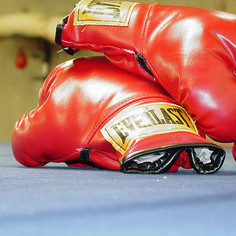
Female Boxers in Skirts?!

If the Amateur International Boxing Association has its way, all female boxers may be forced to wear skirts at the London Olympics this year, to make them look ‘more elegant’.

Read more about it here and sign the petition to stop this nonsense here.