The Steubenville Case – When Will Women Start to Matter?

In the aftermath of the trial of Richmond and Mays, Megan Carpentier writes in yesterday’s Guardian, “Rape is unique in US society as a crime where the blighted future of the perpetrators counts for more than the victim’s.”

Indeed, this is an apt observation, given the sickening way in which CNN, among others, reported on the verdict two days ago. Given the anger this had sparked on blogs and other social media, you’ve probably come across it by now, but just in case you haven’t, here’s what CNN had to say about Mays and Richmond’s being found guilty of rape:

Reporter Poppy Harlow: “I’ve never experienced anything like it, Candy. It was incredibly emotional, incredibly difficult even for an outsider like me to watch what happened as these two young men that had such promising futures — star football players, very good students — we literally watched as they believed their life fell apart.”

Anchor Candy Crowley: “A 16-year-old just sobbing in court — regardless of what big football players they are, they still sound like 16-year-olds. When you listen to it and realize they could stay until they’re 21, what’s the lasting effect, though, on two young men being found guilty, in juvenile court, of rape, essentially?”

Legal expert Paul Callan: “The most severe thing with these young men is being labelled as registered sex offenders. That label is now placed on them by Ohio law…That will haunt them for the rest of their lives.”

Poor, poor rapists. What an unfortunate fate to befall them. Only, it wasn’t misfortune, it wasn’t bad luck that led to the blighting of their “promising futures”. It was their actions, and their responsibility, when they noticed a drunk girl throwing up by the side of the road, and instead of helping her, decided to rape her and take pictures of her for laughs with the boys. Sure, 16-year-olds sobbing in court might be an emotional sight. But what about a 16-year-old who wakes up one day to discover that she had been raped while unconscious the night before? To see pictures and videos of her violation and abuse flung about on social media? To see her rapists and their friends laugh and boast about it? To be humiliated and mocked by people she knows, and even people she doesn’t? To have people call her a liar and a whore, and threaten to hurt her for reporting the crime? What’s the “lasting effect” of that?

While the Steubenville case has garnered widespread media attention, the spotlight has been turned on the jock culture in Steubenville itself, and particularly the high school. Yet as we know, what goes on there — the star status of the football team, the impunity they face for their actions, the disrespect they show towards women — is merely a microcosm of what goes on everywhere else in the world. And it isn’t just male athletes, of course. Male politicians, male CEOs, male media hotshots, any man in a position of power can use and abuse women with relatively little censure. The public rushes to defend them, to sympathize with them. The woman must be lying. She must be doing it for financial gain, or for revenge. Did he hit her? She must have pushed him to it. We’ve heard it all before. And now, even when the rapists have provided heaps of evidence of their crime, in the form of photographs, videos and bragging text messages, some people, including the victim’s own friends, still find it reasonable to label the victim a liar, and media outlets still find it so tragic that the criminals have been made to answer for their crime.

From rawstory.com

From rawstory.com

It sometimes absolutely staggers me just how little women matter in society. This is one of those times. Shakespeare’s As You Like It contains the famous lines — “All the world’s a stage, / And all the men and women merely players.” Perhaps less poetically, but more accurately, I would say that all the world’s a stage, and while the men are players, women are their props, to be adored as possessions and prizes, or despised and used as cheap, worthless trinkets.

Women matter, for we are human too. Is that so difficult for society to grasp?

The Pampering Trap

An extremely pervasive idea exists in society— that women are to be pampered, especially by the men in their lives. Everywhere you look, adverts for flowers, chocolates and jewellery encourage men to ‘pamper her’, ‘spoil her’, ‘indulge her’, and even on International Women’s Day yesterday, which originated in 1909 to promote gender equality, my Facebook feed was full of friends and acquaintances talking about what they, or someone else had done for IWD, which usually boiled down to (you guessed it) giving/receiving flowers, chocolates or cards, stripping the day of all political meaning.

spoilhervalentines

From Pajamagrams

Indulge-Her-1

From indulge-her.com

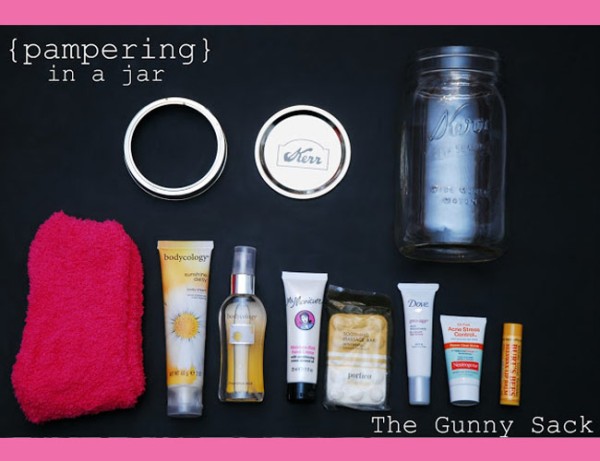
pamperinginajar

But what exactly is wrong with pampering? Isn’t it simply showing your loved one how much you love them? Well, yes and no. First, let’s look at the definition of ‘pampering’ so we know exactly what we’re dealing with.

The Merriam-Webster dictionary defines ‘pamper’ as follows:
a. to treat with extreme or excessive care and attention
b. to gratify, humour.

And here are the synonyms—cocker, coddle, cosset, dandle, indulge, mollycoddle, nurse, baby, spoil, wet-nurse.

Finally, who are most often the objects of pampering? Babies… children… puppies… and women, of course.

Indeed, there is nothing wrong with the act of pampering or being pampered per se. But when it is tied up inextricably in the arena of gender roles within a romantic relationship, then we have a problem. You see, despite advertisers’ overwhelming efforts to convince women otherwise, being locked into the role of the pampered is markedly disempowering. It presupposes a fragility and helplessness on our part, and our happiness depends, not on our own actions, but on what is done to us. In short, we are once again the object, not the subject, and heterosexual relationships are sold to us as ‘Man and his cherished possession’. The word ‘humour’ in the definition is also telling of the power imbalance inherent in the act. All throughout history, women have been expected to obey and follow their husbands’ desires, and men encouraged to ‘humour’ their wives’ supposedly unreasonable but adorable whims.

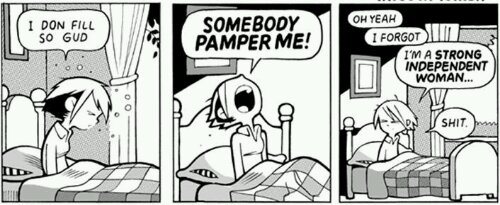
Sadly, whenever women rebel against the perception that they need to be treated like precious gems or delicate glass, and proclaim themselves to be independent of men, that too is treated as a caprice, declared by a woman who doesn’t quite know her own mind. The sentiment is neatly summed up in this comic I found bobbing around Facebook:

pamper

By Tatsuya Ishida

Haha, get it? Women don’t really want to be strong and independent, we just say we do! We do want a man to just take care of us, but we won’t admit it! Hahaha! Haha!

Ugh.

Two points need to be made, I think.

Firstly, yes, many straight women today do seem to desire being looked after and ‘spoilt’ by their man. And many women do enjoy the feeling of being kept and provided for, even in a submissive capacity. But does that mean that women have a natural and biological desire for this? Or could all the messages she’s heard in her life, both subtle and explicit, telling her that a man shows his love by showering her with gifts, by giving her flowers, by being overly protective of her—in short, by treating her ‘like a porcelain doll’—have anything to do with it? I believe that it isn’t the pampering itself that women desire, but what it means. And what it means, we are told, is that he loves her.

Secondly, the sentiment portrayed by the comic above is often thrown in women’s (especially feminists’) faces. So you want to be independent? Great, I’ll slam the door in your face then! I’d help you with those heavy bags, but aren’t you a strong, independent woman? Not feeling well? Don’t expect my sympathy, I thought you were an independent woman!

It’s ridiculous that this even needs to be said, but when feminists object to women being placed on a pedestal and treated like we’re weak and ineffectual, it doesn’t mean that we want to be treated badly. We still expect you to be a decent human being. And being a feminist doesn’t mean we think women are, or should be, invincible. It doesn’t mean we shouldn’t need help or care when we’re ill. It just means that we’re human, no more and no less than that.

So please, let’s all love and respect each other like fully-grown human beings, and stop the damaging narrative surrounding relationships between women and men.

Reeva Steenkamp and Media Representation

Gallo Images/Getty Images

Gallo Images/Getty Images

If you had heard nothing about the murder of Reeva Steenkamp prior to seeing the front page of The Sun on Friday, you might have thought they were running an advert for an erotic horror film. The decision to portray Steenkamp in a highly sexualised manner, coupled with a Hollywoodesque dramatization of her murder scene, sparked outrage, and already petitions have sprung up demanding an apology from The Sun, and to end media sexism in general.

The disrespect that The Sun has shown towards Steenkamp is maddening, and it is far from the only offender. In publication after publication, she is portrayed as no more than a sex object, something to titillate their readership as they read about the main focus of the articles— the downfall of a world-famous athlete. The trial has not yet begun, but already excuses for Pistorius have come thick and fast. ‘Oscar was such a nice man, and not violent at all!’ Never mind that the South African police had confirmed that they had been called to Pistorius’ address before to deal with ‘domestic incidents’. Excuses for violent men…now haven’t we seen this all before?

Of course, the chasm between the focus on Pistorius and Steenkamp in the media and public conversation is partly attributable to their differing levels of fame. Yet, when one looks at the wider picture, it fits into the same old pattern of reporting on gendered violence. It is the male perpetrator’s psyche we fixate on, and his tragedy that we buy into. The female victim is simply a symptom of his downfall, easily replaceable.

What so many news outlets seem to forget is that Reeva Steenkamp is the hero of her own story. Her identity is not ‘Oscar Pistorius’ girlfriend’, nor is it ‘his victim’. She was a model, a law graduate who was about to pursue a legal career, and an advocate against sexual abuse and domestic violence in South Africa. And to her family and friends, she was much, much more.

Reevatweet1

Reevatweet2

Reevatweet3

Quotes from friends:

“the sweetest, kindest, just angelic soul”

“a very inspiring individual, very passionate about speaking about women and empowerment.”

“She was a lovely girl and her career was just taking off. She had a big heart and was at the forefront of many pro bono projects. She wouldn’t hurt a fly. It’s a tragic loss.”

“I’ve known Reeva for years and she was an incredible, beautiful soul. It’s shocking. An amazing girl has gone too soon.”

So instead of sensationalizing Pistorius, let us grieve for Reeva. And let’s not allow her support for women to have been in vain. 1 in 4 South African women are survivors of domestic violence, and everyday, 3 are killed by their partners. Reeva Steenkamp cared about this. Shouldn’t we?

Nature vs Nurture? – Why We Need to Stop Using Evolution as an Explanation for Gender Differences

When talking about gender issues, the word ‘naturally’ pops up quite a lot.

“Women don’t earn as much as men do because they are naturally less inclined to negotiate for their starting salary.”

“You see images of sexualised women everywhere, but not sexualised men, because men have a naturally stronger sex drive than women.”

“So many men commit acts of violence because men are naturally more aggressive than women.”

“So many women cut their careers short when they have children, because they naturally prefer caring for them instead of working, whereas men naturally prefer work to childcare.”

And once the word ‘naturally’ has reared its head, you can bet that the word ‘evolution’ will quickly follow, with the phrase ‘caveman days’ hot on its heels. Everyone present nods sagely; much beard-stroking ensues.

From clipartmojo.com

From clipartmojo.com

Sadly, proponents of the evolution-as-explanation-for-gender-differences idea seem to have fallen victim to something very similar to the fundamental attribution error, a term used in social psychology to describe humans’ tendency to attribute a person’s behaviour to their disposition, while completely ignoring any situational factors. Although this term refers specifically to individual personality, the same phenomenon seems to be at work when people choose to ascribe gendered behaviour to dispositional reasons, instead of acknowledging the possibility that there could be sociological factors at work.

Of course, there’s no denying that evolution explains almost everything about our physiology, and a good chunk of human behaviour. It is when evolution and biological determinism are used to explain everything, without reference to any period other than the present Western society and the vaguely-defined ‘caveman days’, that problems arise.

Here’s a small example of what I mean.

In 2007, through asking 208 volunteers to select their colour preferences, neuroscientists Hurlbert and Ling discovered that men had a preference for bluish/greenish colours, while women had a preference for pinkish/reddish colours. While the study did nothing to prove that this preference was biological, Ling made the leap quite easily, going from showing that grown men and women tended to prefer different colours, to stating, “This preference has an evolutionary advantage behind it.” Women, it was suggested, had to gather berries while men hunted, and so needed to spot ripe berries and fruits easily. This story was picked up eagerly by newspapers, with headlines like, “Study: Why Girls Like Pink“, and “Scientists Uncover Truth Behind ‘pink for a girl, blue for a boy“. As far as I can see, the study showed nothing about why girls like pink, but simply that they—well—did.

Yet all one has to do is go back 100 years in time (a mere nothing by evolutionary standards) to see that the pink/blue rule is fairly recent, and that the accepted social norms at the time were just the opposite. And since we’re doing some time-traveling, let’s have a look at life just one or two generations ago, and note the behaviour of women and men then, compared with women and men today. And then let’s take a tour around other countries too, in different continents. Maybe have a look at two people of the same ethnicity, who have been brought up on opposite ends of the globe.

I could go on, but I’m sure you get my point—that people’s behaviour isn’t immutable. Social norms play a huge part in determining how we act, what we value, how we feel, and even, apparently, what colour we prefer. Why do women today seem more ‘naturally’ inclined towards engaging in politics and sports than they were a hundred years ago? Why did they seem ‘naturally’ more subservient just 50 years ago? Was it evolution? I think not.

Evolution accounting for gender differences in behaviour is a neat theory to get behind; it satisfies our need for explanations, and gives us the reassurance that everything is as it should be. However, it quickly becomes a thinly-veiled excuse for gender inequality. When we hide behind evolution to justify the gender pay gap, the under representation of women in politics, or male violence against women, we are hiding from any responsibility for our part in sustaining this state of affairs, and we are refusing to acknowledge that change is possible.

So if anyone you know is insisting on sticking to evolutionary reasons for gender differences, tell them about the study of Baby X, where participants were shown to describe and behave towards Baby X in markedly different ways, depending on whether they thought Baby X was male or female. Ask them to watch kids’ TV and read their storybooks, and make a note of how many male and female characters there are, and how each gender is represented. Tell them to go into any children’s shop and read the words written on girls’ and boys’ clothes. Get them to ask both women and men around them what ambitions their families encouraged them to have as a child.

In short, tell them to open their eyes to the gendered pressures and influences that surround each of us, which start from the cradle and follow us throughout our lives, and that create the seemingly stark contrast between the average woman and man, before they decide that all gender differences are predetermined, and gender inequality unavoidable.

Why the Default Male is Not Just Annoying, But Also Harmful

Male or female?

Male or female?

‘He’, ‘him’, ‘his’. If you’re like me, you’ve probably noticed that male pronouns far outstrip female ones in everyday use. And if you’re like me, you probably find that really annoying. Everything, from toilet signs to cartoon characters, has the male gender as neutral and unmarked, while the female gender is marked out with ribbons, skirts, or sexy poses. See a puppy running around the neighbourhood, and people would most likely refer to it as a ‘he’. Random stick figure? Also a ‘he’. This is the reality that all of us have grown up with, and not only is it frustrating, it also has some nasty consequences for women.

The default male makes its presence felt very heavily in the media, from films, to TV shows, to games, to books. This means that, unless the plot makes it absolutely necessary for the character to be female, or the writer is making a specific point about gender, the go-to option is usually male. Think about it: have you ever heard a writer asked in an interview, “Was there a reason you chose a man as your protagonist?” Of course not. Everyone knows you don’t need a reason to have a man as your main character, that’s just what’s normal. And what this means is that the characters that are female are not only fewer in number, they also tend to fall into very narrow, gendered roles—mother, hero’s love interest, damsel in distress, or highly-sexualised heroine.

This is bad news for female actors, naturally, who will have fewer opportunities to gain roles, as well as fewer opportunities to display their acting ability. But it’s also bad news for women as a whole. The problem is, if women are only cast in roles where their gender is integral, if they are not portrayed as fully human but simply symbols of ‘the female sex’, and these are the characters that young girls and boys grow up with, what does that say to them about a woman’s status in society? As the Miss Representation campaign tirelessly points out, how can we expect girls to achieve their potential in life when the media fails to represent or inspire them?

And though the media is a huge offender, it is far from the only one. Even in the realms of academia, the default male is alive and well. As part of the Master’s course I’m currently pursuing, I’ve had the opportunity to read countless papers on psychology in the workplace, as academics continue to find ways to improve the employee experience and to help them reach their potential. The only problem is the samples used in their experiments, which are usually (you guessed it) predominantly male. Oh, you do occasionally get samples with say, 70% women, in which case the writers include a caveat about how the sample was mostly female and thus not entirely representative. But when the sample is 96% male? Nope, nothing wrong with that! Completely representative! What’s troubling is that these papers make up the research that continuously pushes the way our workplaces are organised, helping employees become more fulfilled, and more productive. And if the ’employees’ that we’re gaining a deeper understanding of are really just ‘male employees’, then we have a problem.

Perhaps of even more concern is the default male in the medical industry. In a paper by Verdonk et al in 2009, they write, “Medicine is said to be ‘male-biased’ because the largest body of knowledge on health and illness is about men and their health.” Indeed, because the male sex is allowed to represent everyone, research on the male body is assumed to be universally applicable, with women having ‘extra, womanly issues’ like childbirth, period pains and breast cancer, neatly cordoned off into an exclusive section called ‘women’s health’. When the Body Worlds exhibit first opened, an exhibition showcasing plastinates—preserved human bodies— posed in many different ways, many women were incensed at the fact that all the bodies, with the exception of the bodies used in the pregnancy section, were male. The message was clear: men are humans! They can be young or old, they can play sport, they can write, play chess, ride a bike…in short, lead full, complete lives. Women, on the other hand? They make babies.

The male-bias in medicine has serious consequences. Let’s take the heart attack as an example. Now almost everyone can tell you the symptoms of a heart attack. A squeezing, painful feeling in the chest is the surest sign, accompanied by pain in the left arm. Right? Well, as it turns out, that pain in the chest is a classic male heart attack sign, and female heart attacks often have very different symptoms, more comparable to indigestion than chest pain. According to Katherine Kam on WebMD, “many doctors still don’t recognize that women’s symptoms differ, [and] they may mistake them for arthritis, pulled muscles, indigestion, gastrointestinal problems, or even anxiety and hypochondria…many emergency room doctors still look mainly for chest pain.” In such cases, the male-bias can be fatal.

We are more than symbols of our sex. We are more than roles filled in relation to men. We demand full and equal participation and representation in human life, not a sweet little space marked out as ‘not male’.

“Are women human?” Dorothy Sayers asked ironically in 1938. 75 years later, that question is still as poignant as ever.

The Newtown School Shooting — Why We Mustn’t Ignore Gender

Photo by Richard Adams; published on guardian.co.uk

Photo by Richard Adams; published on guardian.co.uk

Yesterday, a young man entered an elementary school in Newtown, Connecticut, and opened fire on both staff and students, killing 20 children and 6 adults. It was later found that he had also killed his own mother, bringing his total victim count to 27.

Following the tragedy, news outlets and social media were ablaze with horror and misery, vigils were held for the victims and their families, and a nation mourned for the innocent lives so cruelly snatched away by a senseless act of brutality.

It is always heart-rending to hear about a school shooting. Yet, what I find even more upsetting is the fact that this is nothing new. We’ve seen it all before—in 2007 at Virginia Tech; in 2006 at Pennsylvania, in 2005 at Red Lake High School, Minnesota; in 1999 at Columbine High School—and so on. As President Obama tearfully said in a televised statement, America has “been through this too many times.” Each time it happens, we find ourselves shaking our heads in shock and bewilderment. Who is this guy? What is his personal history? What could have driven him to this? We obsess over the minutiae of the perpetrator’s psychology, treating it as an isolated, freak incident, while missing the larger pattern that is woven by each and every case. If we miss the pattern, then we cannot expect to find a solution. And without a solution, we are doomed to experience such tragedies over and over again.

The Newtown shooting has reignited an ongoing debate about gun control in America, which is a promising start. Although America has always felt strongly about the right to bear arms (in a Gallup poll conducted last year, 55% felt that the gun laws should either remain the same or become even more lenient), public opinion is shifting towards gun control, with many taking to Twitter or Facebook to voice their support for tighter restrictions.

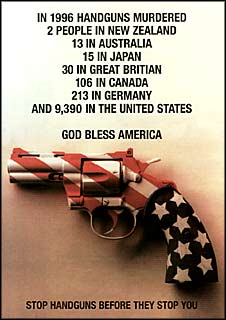
From changingworld.com

From changingworld.com

While I very much agree with the call for tighter gun control, and hope that Obama’s reference to “meaningful action” is more than just rhetoric, I feel that a fixation on the idea of guns as the main problem loses sight of the root of the issue. After all, 27 people died yesterday not because an out-of-control gun went on a rampage, but because a man picked up a gun, aimed, and pulled the trigger, 27 times. There are two issues that need attention here—the ease of obtaining and carrying a gun, but also the murderers themselves.

And when we do examine the perpetrators, there is a glaring pattern that is frequently overlooked; that is, the gendered dimension of the attacks. In response to yesterday’s shooting, The Telegraph did a short recap of the ten worst school shootings in the US. Out of this list, 100% of the perpetrators were male. About two months ago, Mother Jones ran a report on mass shootings in America. According to the article, there have been 62 incidents in the last 30 years, and 61 out of the 62 perpetrators were male. And according to the Bureau of Justice Statistics, it is men who commit over 90% of violent crimes in America, and start 100% of wars.

The problem is, whenever people (usually feminists) point this out, they are met with cries of “misandry” and “demonization of men.” People (usually men) are quick to point out all the acts of heroism done by men, drawing attention to the brave policeman who saved countless civilians, to the self-sacrificing husband who protected his wife and children, frequently followed by a command to the female gender to be grateful to men for protecting them from, well, other men.

But if we want the level of violence in society to decrease, we cannot afford to ignore the gendered aspect of crime. We need to take a close look at male culture, and ask ourselves what lessons we teach young boys about what it means to be a man. We need to question the link between masculinity and power, between masculinity and dominance, and ask ourselves why little boys grow up needing to achieve both these qualities, which frequently translates into being either a hero or a villain. Most of all, we need to address the crisis in male emotional health, and ask ourselves why crying, expressing love, fear, or hurt, are emotional outlets that are denied to most men and boys. When the only emotion that a man can legitimately express is anger, how can we be surprised that many men turn to violence in response to emotional issues?

I do not buy biological reasons for male violence, especially since tests concerning the difference between male and female brains have largely been inconclusive. (For more on this, look up Delusions of Gender by neurologist Cordelia Fine.) Most men are not violent criminals, and to simply accept men’s near-monopoly on violence as a reflection on male nature is unfair. We as a society, with our rigid gender roles and our glorification of (male) aggression and power, continue to churn out violent men, and perpetuate the dynamic we were born into. But I firmly believe that we can also change it.

How many more young men have to be imprisoned before we acknowledge a problem with the values they’ve been brought up with? How many more children have to die, and how many more families have to grieve?

I’m ready for a safer world. And I know you are too.

Shame in the Patriarchy

Shame can arguably be said to be one of the worst emotions out there. Emotions like fear, grief and jealousy are strong contenders, and yet these feelings, strong as they are, don’t quite work in the same way that shame does. Dr Mary C. Lamia, a clinical psychologist, positions shame as unique in that it “lead[s] you to feel as if your whole self is flawed”, eating away at your sense of self-worth until you can no longer bear to face public scrutiny, or indeed, yourself.

Beautiful without makeup

Given the deep-reaching effects of shame, it is not surprising, then, that it makes a remarkably effective tool for maintaining the patriarchal order. Women are shamed for a whole host of reasons— for being fat, being ugly, being hairy, being an airhead, being sexually promiscuous, being sexually conservative—the list goes on. Men are shamed when they behave too much like women—when they show emotional sensitivity, when they dress like women, or enjoy traditionally feminine activities, or when they (horror of horrors) allow themselves to be subservient to a woman. The result is a preservation of the status quo, where men act in dominant, assertive, stoic ways, and women walk the fine line of adhering to decorative ideals, but careful not to take it so far that they are labelled ‘sluts’.

It all seems pretty straightforward when laid out this way, but the waters are muddied by the invisibility of these forces. Indeed, it would make things far less complicated if we could identify a group who had nefariously and deliberately devised these rules for the purposes outlined above. When a man laughs at another for being “pussywhipped”, he (usually) isn’t consciously thinking, “My friend doesn’t have power over his girlfriend. This is a threat to the position of men and women in society! What should I do? I know- I’ll mock him and make him feel humiliated. Everyone must know that this is an unacceptable position for a man to be in!” Likewise, when a woman talks about how fat another woman is, she isn’t trying to make a statement about the female obligation to always maintain our sexual attractiveness. No—they’re doing it because this is what they’ve always known, because they’ve never lived in a society that gave them an alternative lens through which to view men and women. And from a societal point of view, it doesn’t matter that their statement was merely a throwaway remark; the effects are the same as if we’d all pulled together and orchestrated it.

Next time we hear a friend engage in a bout of casual shaming, let’s make sure they have a little think about what they’re really saying. Let’s ask them why they feel that a woman’s worth is bound up with her sexual activity. And why they gave their male friend a high-five for sleeping with loads of women. Let’s ask them why Hillary Clinton’s appearance is relevant to her role in politics. And if they continue to think it appropriate to criticize politicians for completely random and irrelevant traits, ask them why they never thought to judge Obama’s competence based on his pottery skills. Ask why no newspaper has ever run a feature on how ugly David Cameron is. Finally, let’s ask them why they’re telling their sons that ‘being a gi-rl’ is the worst thing he can be. And what message that sends to their daughters.

Then let us reserve shame for activities that actually deserve it. Let violence, rape, and the exploitation of women be shameful. Let the horrors of war and mass murder be a source of shame, not glory. Let the next generation of children grow up knowing that shame will never touch them for abandoning gender roles, and give them a world defined by love and harmony, and not by domination and power.